
.webp)

.webp)
.webp)
.webp)


.svg)
.svg)

Introduction
By the time most homeowners decide to install rooftop solar, they've usually figured out one thing. Solar panels are only part of the story.
The next question often catches them off guard.
"Should I choose an on-grid system, an off-grid system, or a hybrid one?"
It's a fair question because each setup works differently. A family living in the middle of Bengaluru, where electricity is fairly reliable, may not need the same system as someone running a farmhouse outside Nashik or a home in a town that experiences frequent power cuts.
For many homeowners, understanding solar system financing before choosing a setup is just as important as selecting the right technology. Exploring financing options early can help you invest in a system that meets your energy needs without putting unnecessary pressure on your budget.
This guide explains the differences between each option, how much they generally cost, and how to decide which solar system is best for your home based on your own requirements.
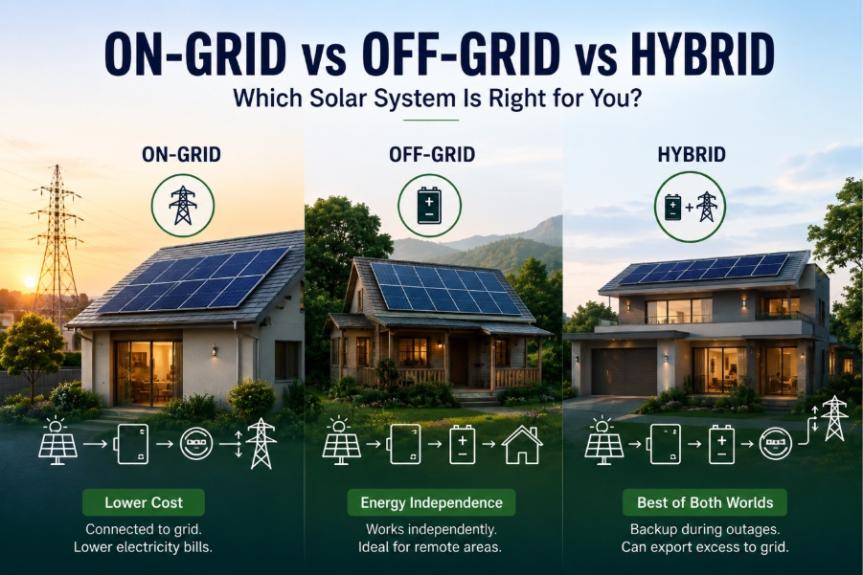
What Is an On-Grid Solar System?
An on-grid system is the one most homeowners in cities end up installing.
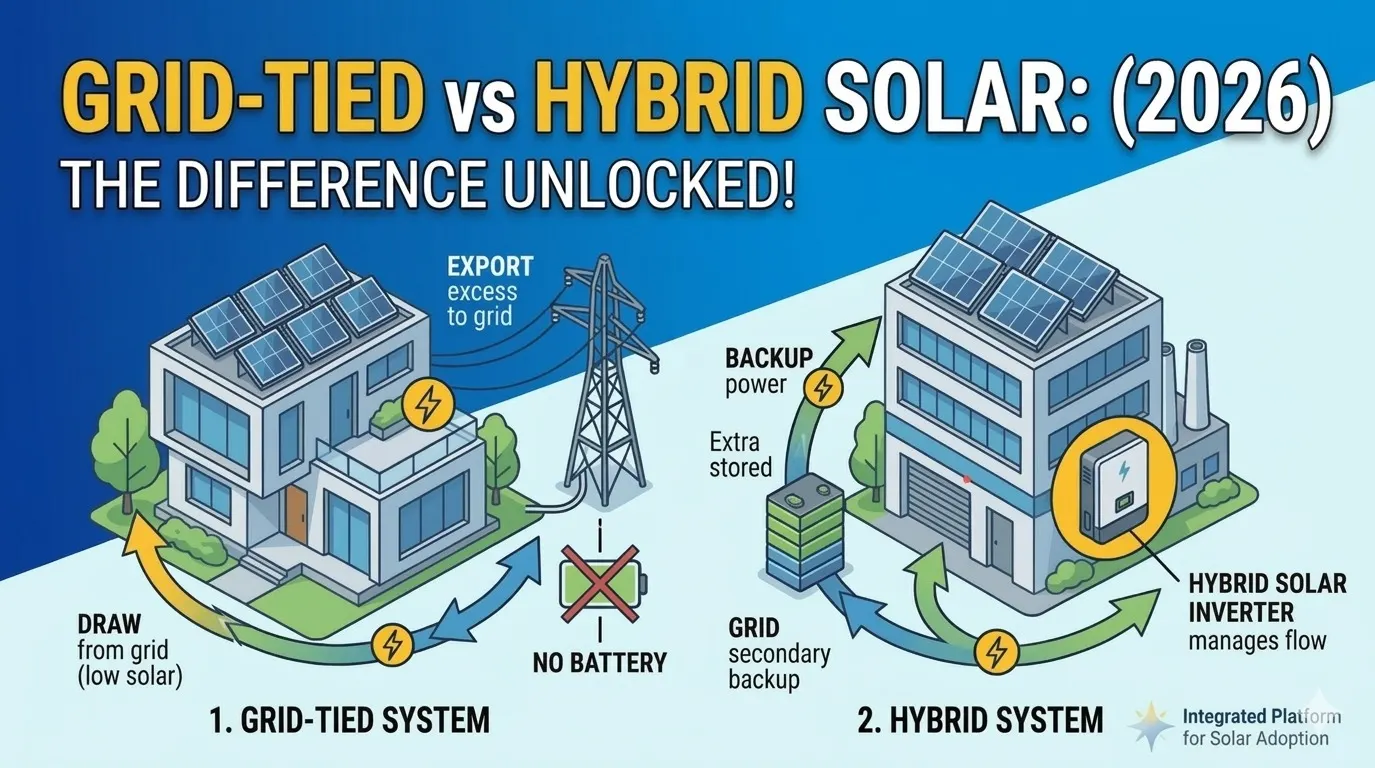
As the name suggests, it's connected directly to the electricity grid. During the day, your home uses the electricity generated by the solar panels first. If the system produces more electricity than you're consuming, the surplus can be exported through net metering. When solar generation falls, such as after sunset, electricity is drawn from the grid as usual.
Because there are no batteries involved, the system is relatively simple and more affordable than other configurations.
This is also why the on-grid solar system cost is usually the lowest among the three options.
An on-grid system is a good fit if:
- Your locality has a reliable electricity supply.
- You're looking to reduce electricity bills.
- Net metering is available through your DISCOM.
- Battery backup isn't a priority.
What Is an Off-Grid Solar System?
An off-grid system works independently of the electricity network.
Instead of exporting surplus electricity, it stores excess power in batteries so it can be used later, including at night or during power outages.
Because the system isn't connected to the grid, battery storage becomes an essential part of the setup rather than an optional addition.
This makes off-grid solar for homes particularly useful in remote locations where grid access is limited or unreliable. It's also chosen for agricultural properties, farmhouses, and certain rural businesses where uninterrupted electricity is important.
The trade-off is cost. Batteries represent a significant share of the project budget, which is why the off-grid solar system cost in India is generally much higher than a comparable on-grid installation.
What Is a Hybrid Solar System?
A hybrid system combines features of both approaches.
Like an on-grid system, it remains connected to the electricity network. At the same time, it includes battery storage that can provide backup during outages.
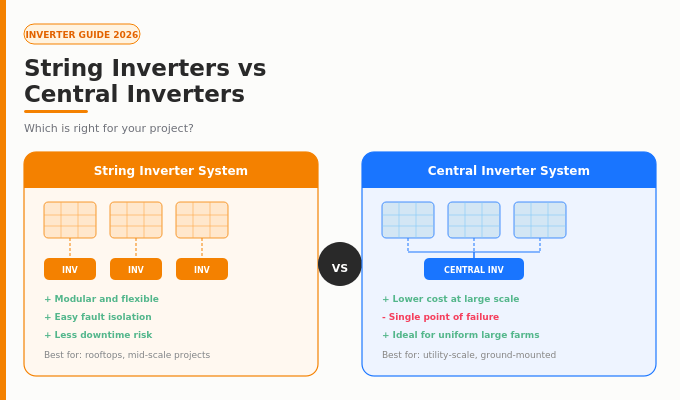
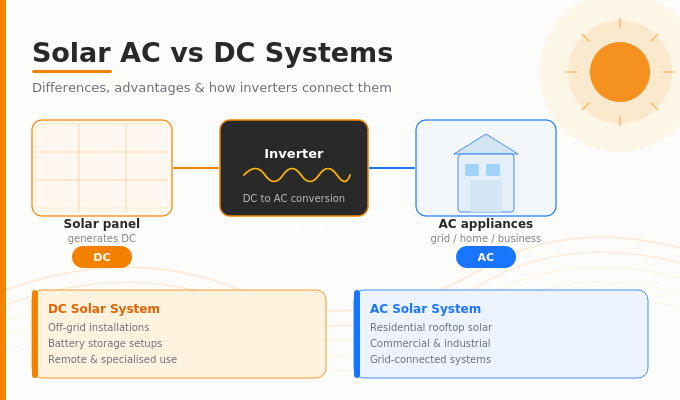
The heart of the system is the hybrid inverter, which manages electricity flowing between the solar panels, batteries, household appliances, and the electricity grid.
Here's how it works in practice.
During the day, your home runs on solar power.
If there's extra generation, the batteries are charged first. Depending on the system configuration and local regulations, any additional surplus may be exported to the grid.
When there's a power cut, the batteries automatically supply electricity to selected household loads.
This flexibility explains why the hybrid solar system India market has grown steadily over the past few years, especially in areas where electricity outages are occasional but still frequent enough to cause inconvenience.
Key Differences Between On-Grid, Off-Grid, and Hybrid Systems
Although all three systems generate electricity using solar panels, the way they manage and store energy is quite different.
For most homeowners comparing on-grid vs. off-grid solar systems, battery storage is usually the biggest deciding factor.
Cost Comparison
If budget is the primary concern, an on-grid system is generally the most economical choice because it doesn't require batteries.
Hybrid systems involve a higher investment because of battery storage and a hybrid inverter, while off-grid systems typically cost the most since they depend entirely on batteries for electricity outside daylight hours.
The exact difference varies according to battery size, panel capacity, and the equipment selected.
Battery Backup
This is where the three systems differ most clearly.
An on-grid system usually shuts down during a power outage for safety reasons, even if the sun is shining.
An off-grid system continues operating because the batteries supply electricity directly.
A hybrid system offers a middle ground by using stored battery power during outages while remaining connected to the grid under normal conditions.
Grid Dependency
On-grid systems depend on the electricity network whenever solar generation isn't sufficient.
Off-grid systems are completely independent but require enough battery storage to meet demand throughout the night and during cloudy weather.
Hybrid systems reduce dependence on the grid while still keeping it available whenever additional electricity is required.
Which System Is Best for Your Home?
There's no single answer because every home uses electricity differently.
A family living in a city apartment may have completely different priorities from someone managing a farmhouse or a standalone villa. Instead of focusing on the latest technology, it's more useful to think about how you use electricity every day.
An on-grid system is usually the right fit if:
- Your area has a dependable electricity supply.
- Your primary goal is lowering monthly electricity bills.
- Net metering is available through your DISCOM.
- You don't require backup during power cuts.
An off-grid system is worth considering if:
- Grid electricity is unavailable or highly unreliable.
- The property is located in a remote area.
- Energy independence is more important than reducing upfront costs.
A hybrid system suits homeowners who experience occasional outages but still want to benefit from grid connectivity and net metering where applicable.
If someone asks which solar system is best for home, the answer usually depends less on the panels and more on the reliability of the local electricity supply.
Which System Is Best for Areas with Frequent Power Cuts?
This is where battery storage makes a noticeable difference.
In an area with frequent outages, an on-grid system may not provide the experience many homeowners expect. Since standard on-grid systems disconnect during a power cut for safety reasons, your home won't continue running on solar power unless battery backup has been installed.
That's why hybrid systems have become increasingly popular across many parts of India.
They continue generating solar power during the day while storing part of that electricity in batteries for later use. When the grid goes down, essential appliances such as lights, fans, refrigerators, or internet routers can continue operating through the stored energy.
For locations with little or no grid connectivity, off-grid solar for home remains the more practical solution because it is designed to operate independently throughout the year.
Cost of Each System Type in India
The price of a rooftop solar system depends on its size, equipment quality, and installation requirements. Battery storage also has a major influence on the final investment. While comparing installation costs, it's also worth looking at the best solar financing options available. Flexible repayment plans can make it easier to invest in hybrid or larger rooftop systems while keeping your monthly expenses manageable.
Here's a broad comparison for residential systems.
Indicative market ranges. Actual quotations vary depending on system capacity, battery size, equipment selection, and installation conditions.
The on-grid solar system cost is generally the lowest because batteries are not part of the system.
The off-grid solar system cost in India is higher due to battery storage and additional electrical equipment. Hybrid systems usually sit somewhere in between, balancing backup power with grid connectivity.
When comparing quotations, it helps to look beyond the headline price. Warranty, battery quality, inverter technology, and after-sales support often have a much bigger impact over the life of the system.
Pros and Cons of Each System
Every configuration has its strengths, and each involves a different balance between cost, convenience, and energy independence.
On-Grid
Advantages
- Lower upfront investment.
- Simple system design.
- Compatible with net metering.
- Lower maintenance because batteries aren't required.
Things to consider
- Doesn't provide backup during grid outages.
- Depends on electricity supply outside solar generation hours.
Off-Grid
Advantages
- Complete independence from the electricity grid.
- Reliable power for remote properties.
- Useful in areas where grid connectivity is unavailable.
Things to consider
- Higher installation cost.
- Battery replacement will be required over time.
- More system components to maintain.
Hybrid
Advantages
- Provides battery backup during power cuts.
- Continues benefiting from rooftop solar generation.
- Greater flexibility for changing electricity needs.
Things to consider
- Higher initial investment than an on-grid system.
- Battery capacity should be planned carefully based on household usage.
How Aerem Helps You Choose the Right Solar System
Choosing between three different system types can feel overwhelming, especially when every installer recommends something slightly different.
Aerem helps homeowners evaluate their options based on actual electricity consumption, property requirements, and long-term financial goals. Whether you're comparing an on-grid installation, exploring a hybrid solar system in India, or looking for reliable home solar solutions, the focus is always on recommending a system that fits your lifestyle rather than simply the largest capacity.
For those concerned about the initial investment, Aerem also supports rooftop solar financing, making it easier to spread the cost of installation over manageable repayments while still beginning the transition to clean energy. Flexible payment solutions have made financing solar projects much simpler for homeowners. Instead of delaying installation because of upfront costs, many families can switch to solar sooner and begin saving on electricity bills while spreading the investment over convenient repayment terms.
Conclusion
Every rooftop solar system begins with the same goal: generating clean electricity. What changes is the way that electricity is used, stored, and managed once it reaches your home.
For households with reliable grid power, an on-grid system often delivers the best value. Where electricity interruptions are common, a hybrid system adds peace of mind through battery backup. And for remote locations where the grid isn't a dependable option, an off-grid setup provides complete energy independence.
Before making a decision, take a close look at your electricity bills, how often power cuts occur, and what you expect from your solar investment over the next twenty years. Choosing the right system today can make a noticeable difference to both your monthly savings and your overall experience with rooftop solar.











.png)


.png)


.jpeg)
.jpeg)




.jpeg)








.jpeg)
.webp)
.png)
.png)
.png)
.png)
.png)

.png)
.jpg)
