
.webp)

.webp)
.webp)
.webp)

.png)

.svg)
.svg)

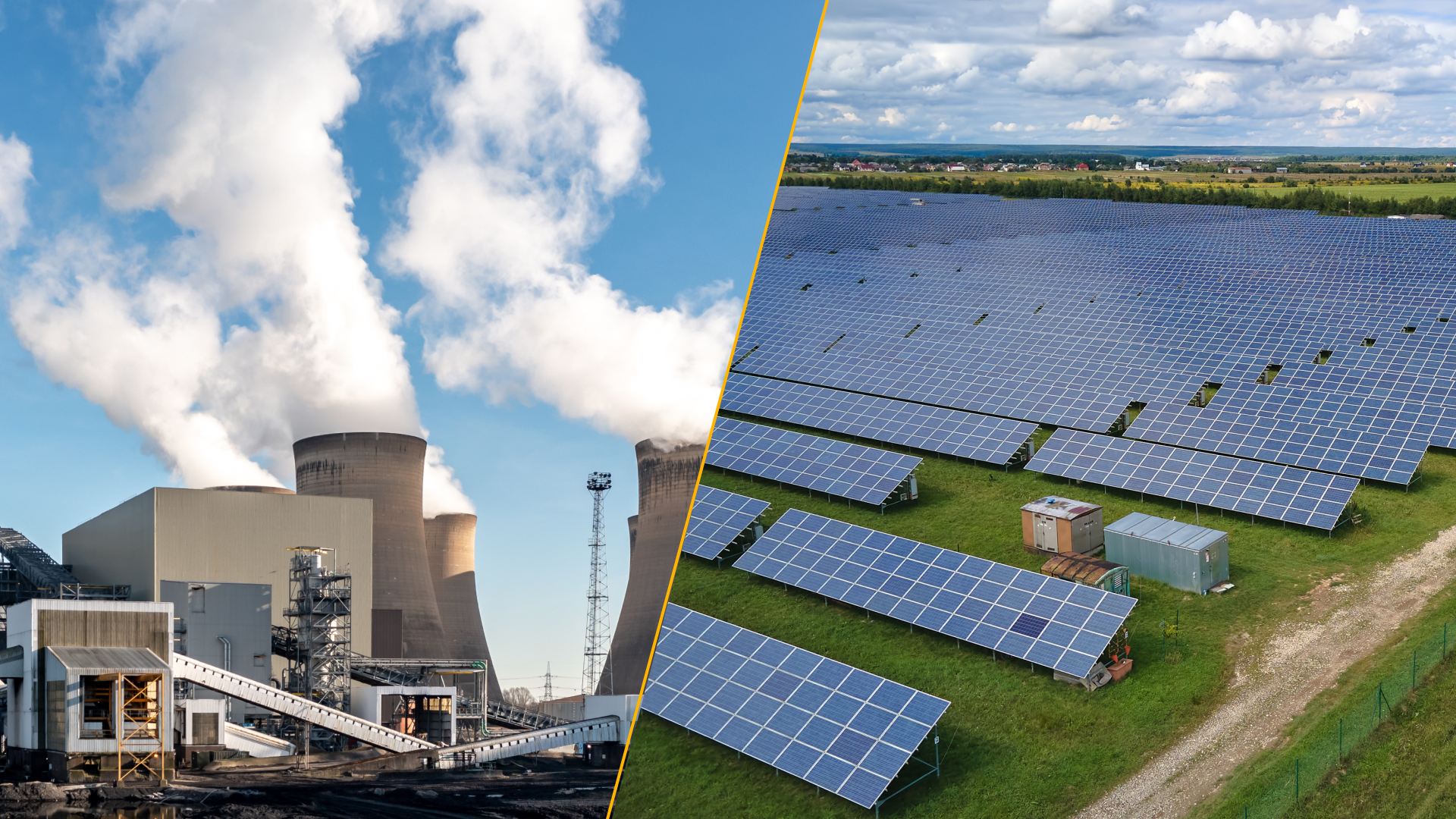
For a long time, solar in India felt like something that happened far away: large solar parks, vast land parcels, and utility-scale projects. That is changing.
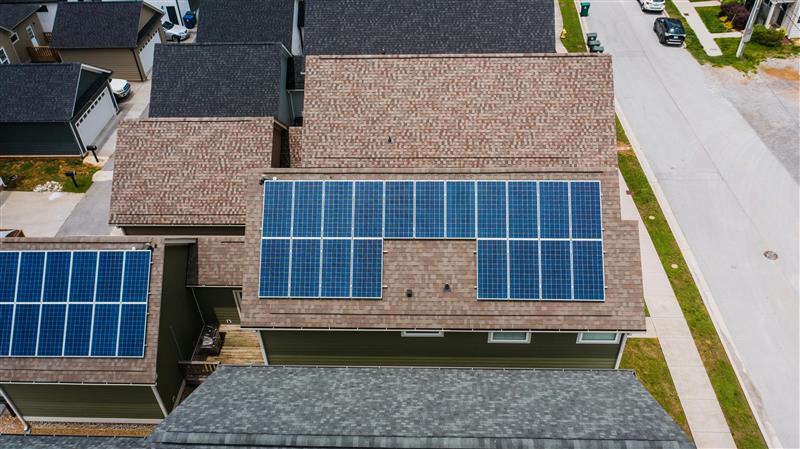
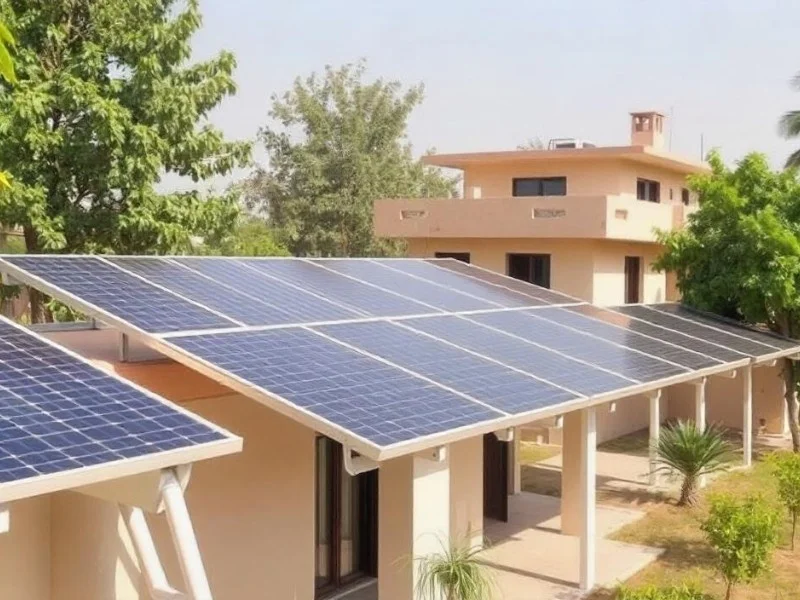
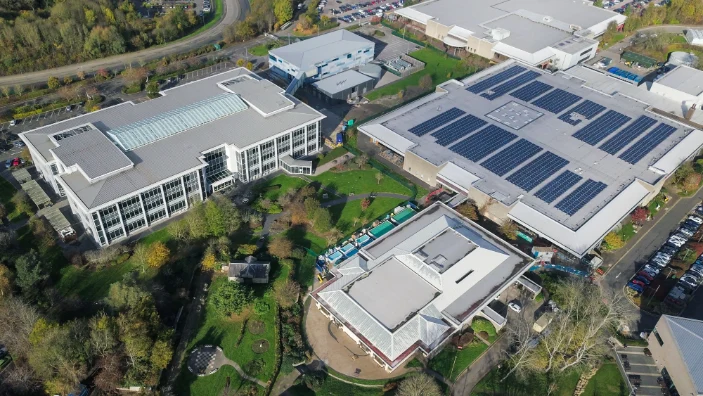
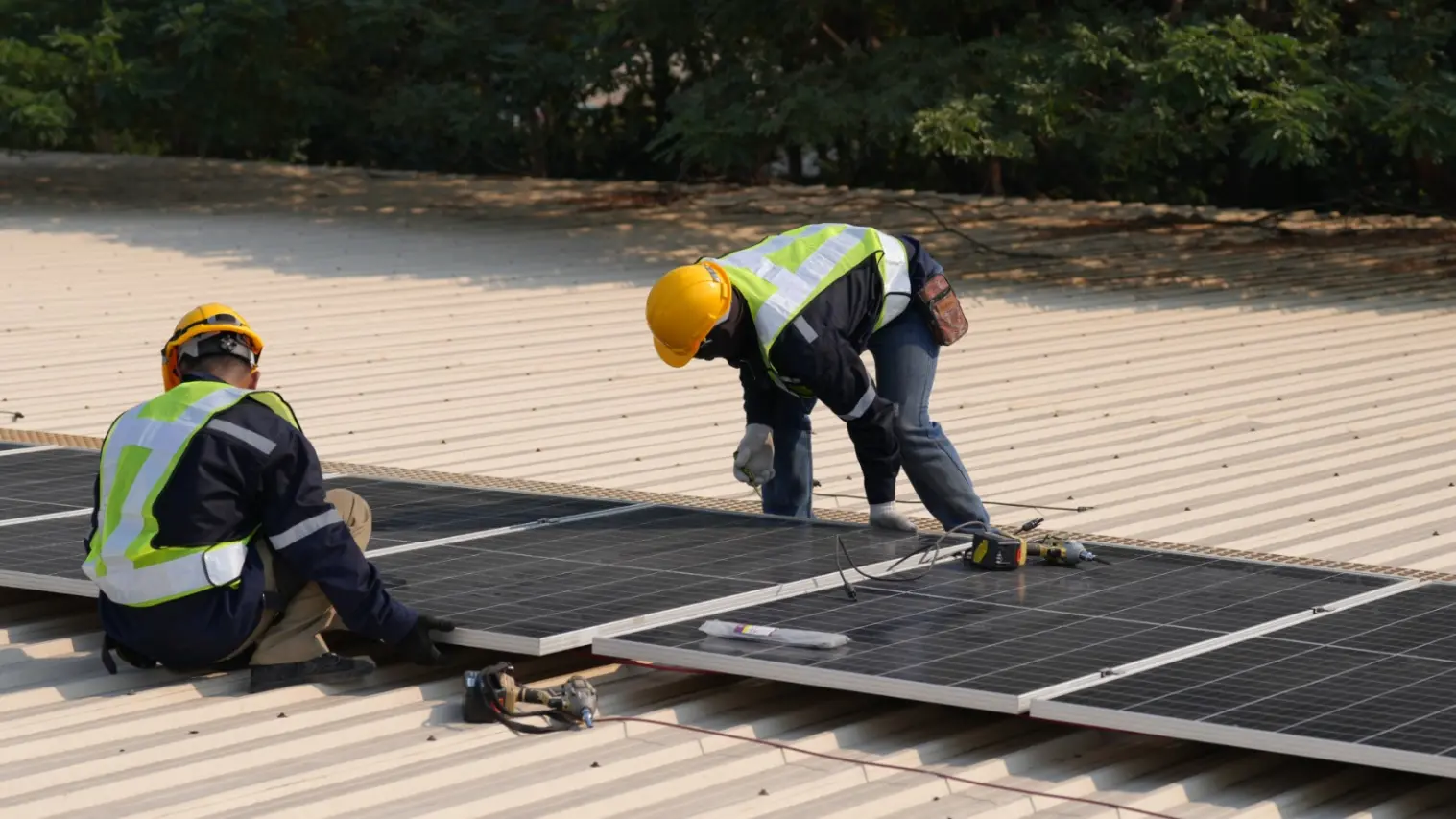
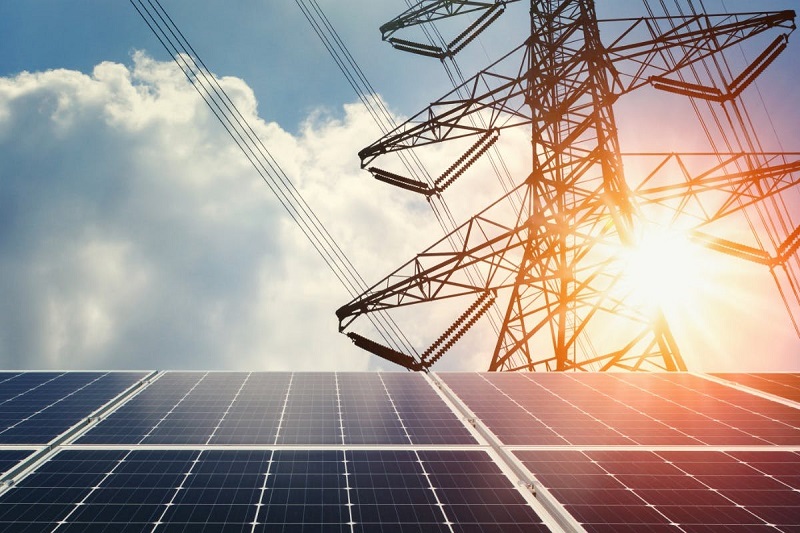
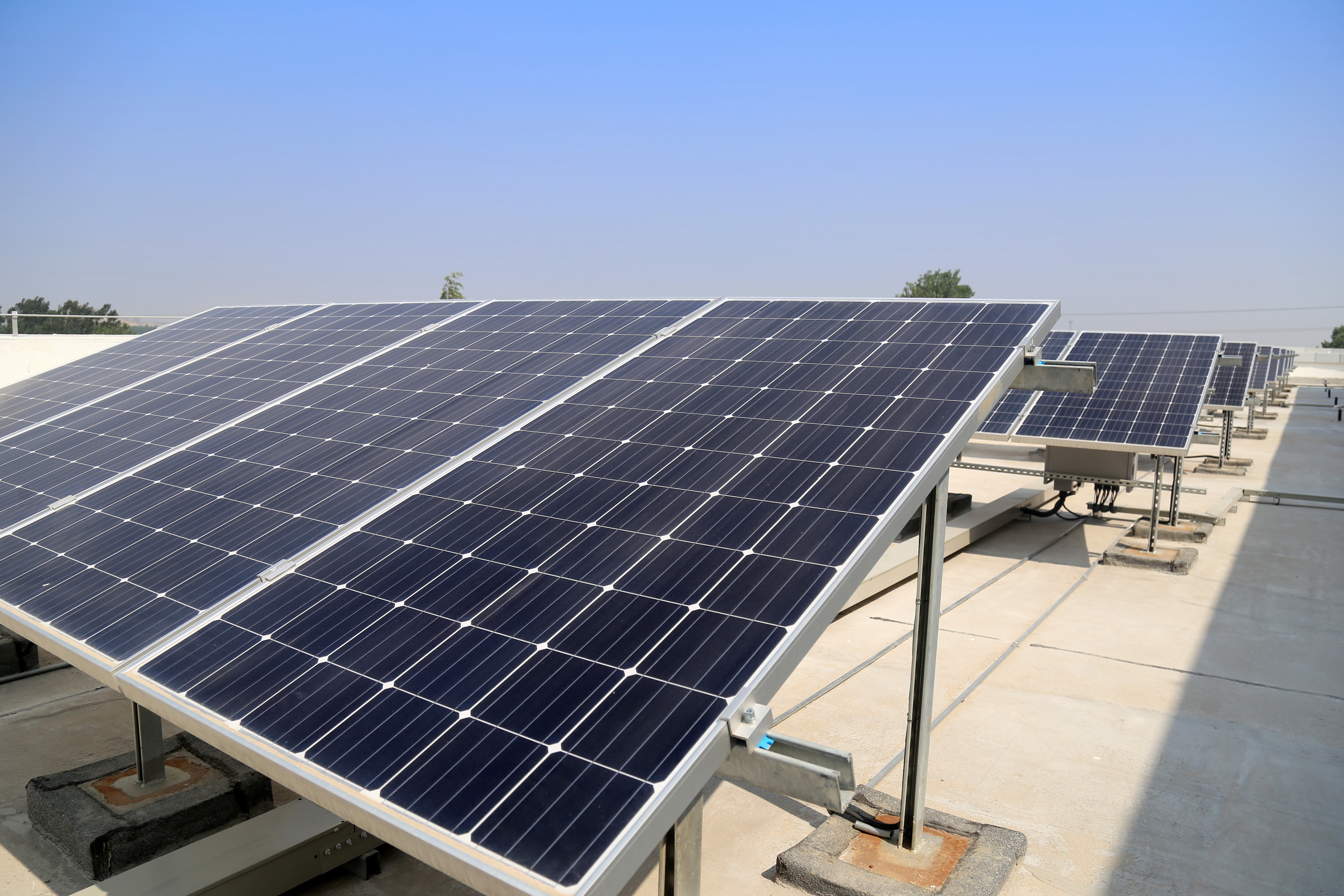
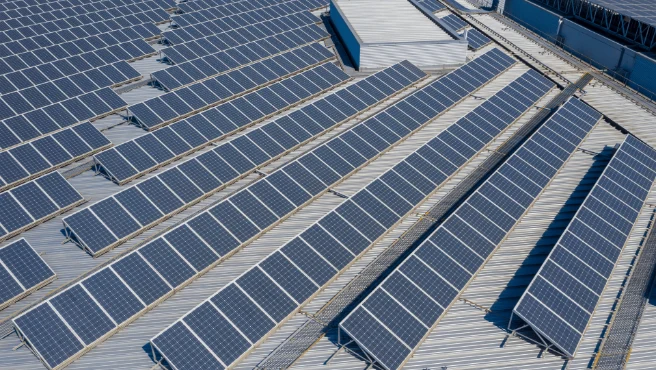
Today, the shift is happening much closer to where energy is actually consumed, on rooftops. From homes to factories, roof solar power is slowly becoming part of everyday infrastructure rather than a niche upgrade.
What’s driving this shift is not just sustainability. It’s a combination of rising electricity costs, better policy support, and access to financing that makes adoption more practical than before.
Growth of Solar Panel in Rooftop Segment
The growth of solar panels in rooftop installations over the last few years has been difficult to ignore.
India added over 7 GW of rooftop capacity in 2025 alone, a sharp jump from previous years. The pace is no longer incremental; it’s accelerating. Total rooftop capacity is now well beyond 20 GW, and projections suggest strong growth over the next decade.
What’s interesting is not just the numbers but the nature of adoption. Rooftop solar is no longer limited to early adopters or large institutions. It is steadily becoming a mainstream decision, especially where electricity costs are high.
Residential vs Commercial Roof Solar Power Adoption
The way solar and roof systems are adopted differs quite a bit between households and businesses.
Residential adoption
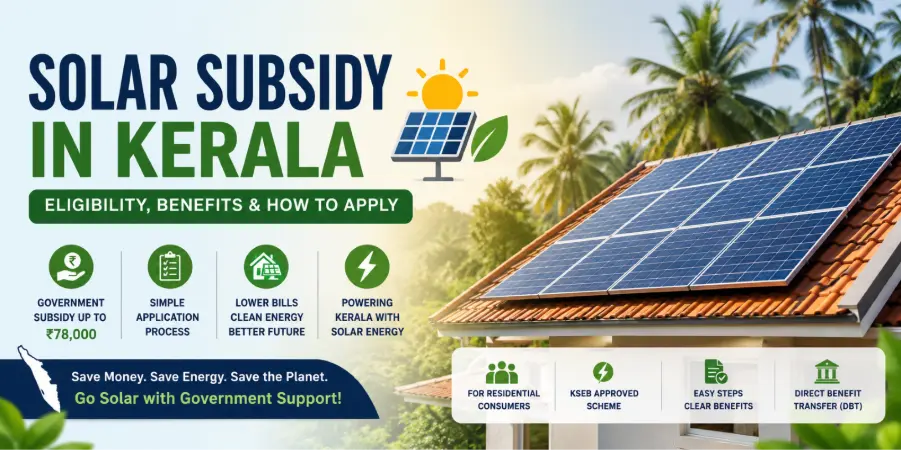
The residential segment has seen a visible push, largely because of subsidy-led schemes.
For homeowners, the decision is usually driven by:
- reducing monthly electricity bills
- long-term savings
- some degree of independence from grid fluctuations
In many cases, the decision is also influenced by awareness; people simply understand solar better now than they did a few years ago.
Commercial & industrial adoption
For businesses, the conversation is slightly different.
C&I users look at roof solar power less as an environmental choice and more as an operational one. Electricity is a significant cost line, and solar provides a way to stabilize that over time.
The systems are larger, the investment is higher, and the expectations are more performance-driven. This is also where financing and system design become far more important.
Government Policies Driving Rooftop Expansion
Policy has played a big role in making rooftop solar more accessible.
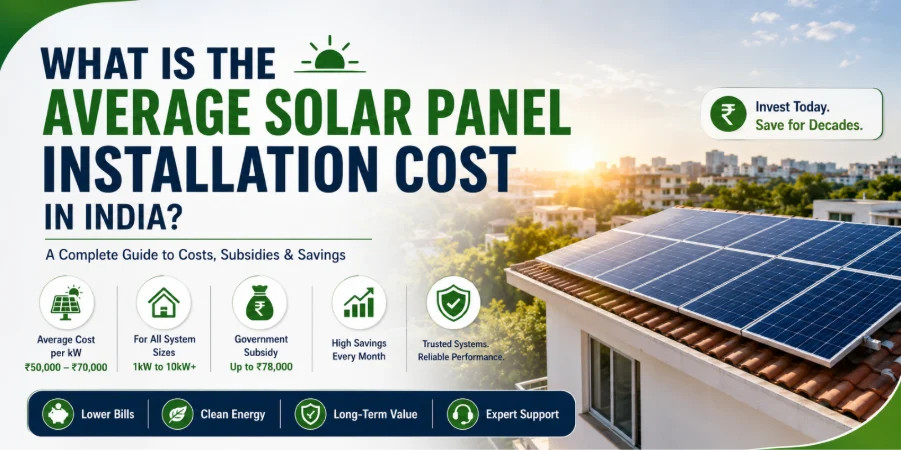
The PM Surya Ghar initiative, for example, has made residential systems more viable by reducing upfront costs through subsidy. Net metering policies have also improved the financial case by allowing users to export excess power.
At the same time, some states have started simplifying approval processes, something that used to be a major bottleneck.
That said, the experience is still not uniform. Implementation varies, and timelines can differ depending on location. But overall, the direction is clear: policy is trying to make rooftop solar easier to adopt.
Market Trends & 2026 Outlook
A few patterns are becoming visible as the rooftop market evolves:
- Rooftops as energy assets: Rooftops are no longer passive spaces. They are increasingly being seen as assets that can generate value.
- Faster residential uptake: Subsidy-backed demand is pushing faster adoption in the residential segment.
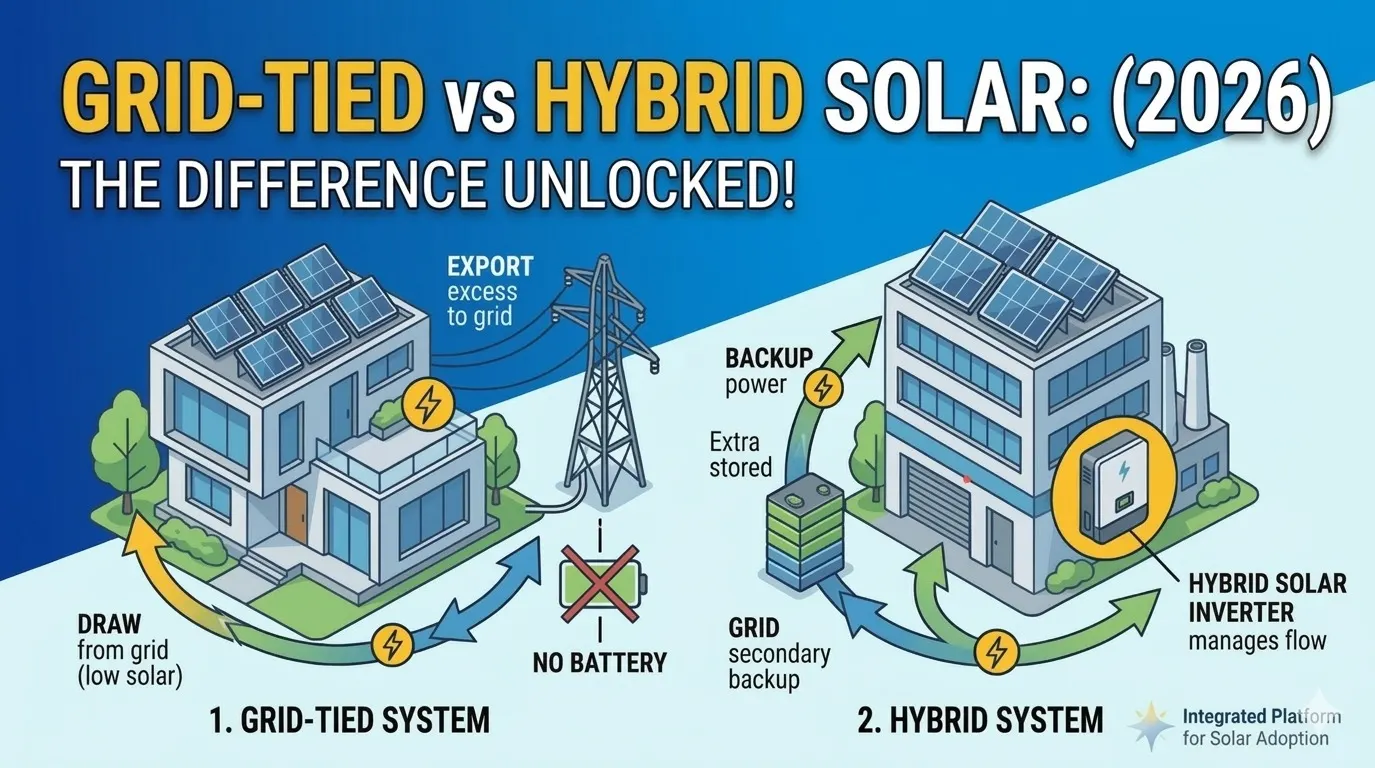
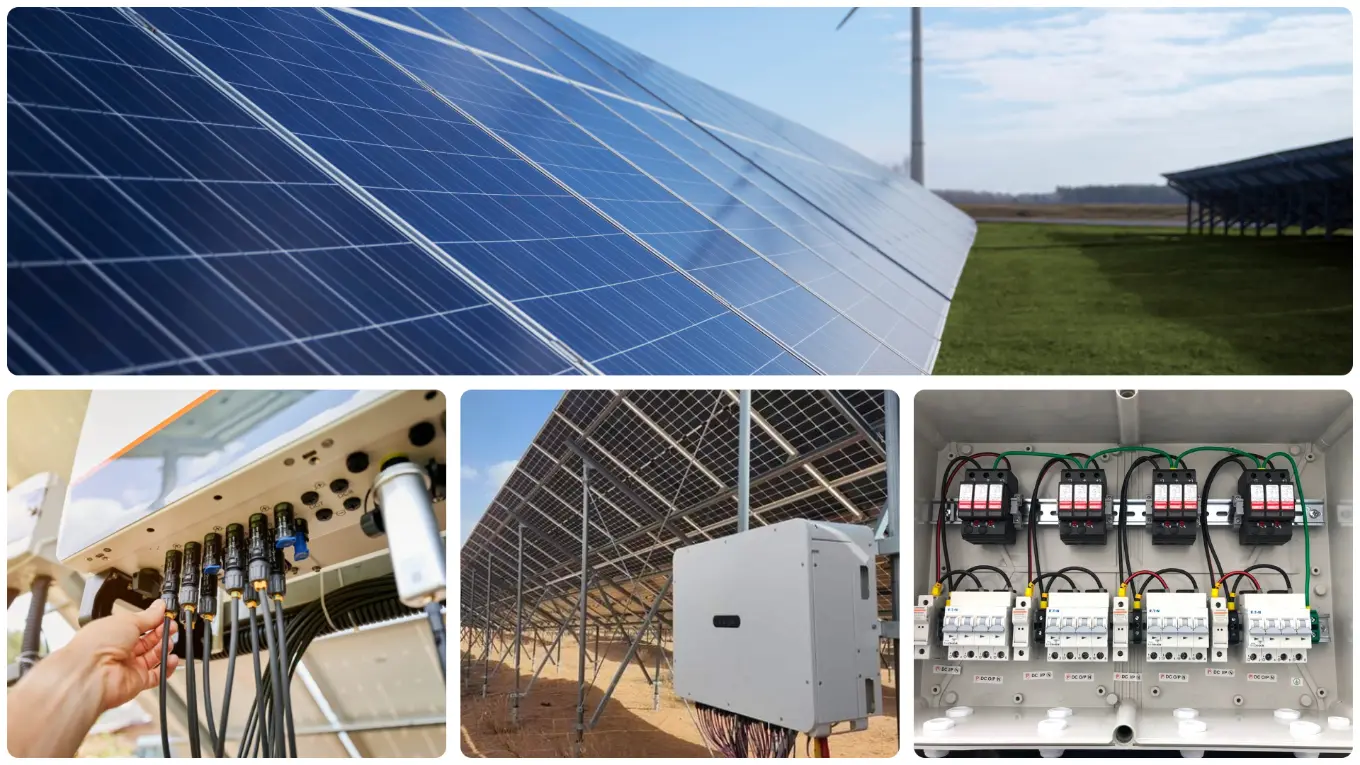
- Increasing system integration: Rooftop systems are now being paired with:
- battery storage
- EV charging
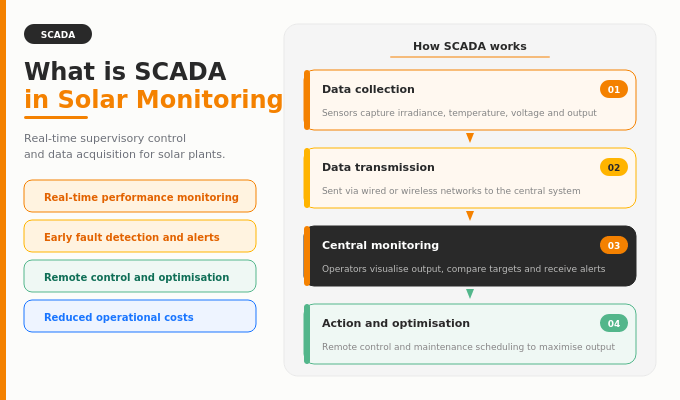
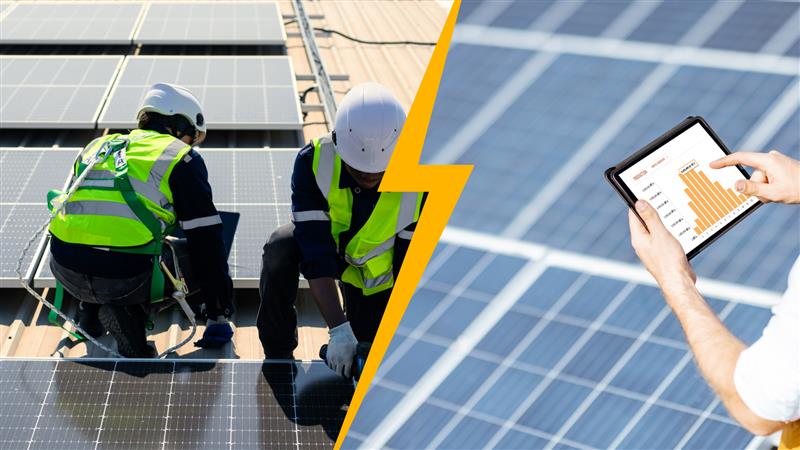
- smarter monitoring systems
- More structured financing: The role of financing is becoming central, especially for businesses.
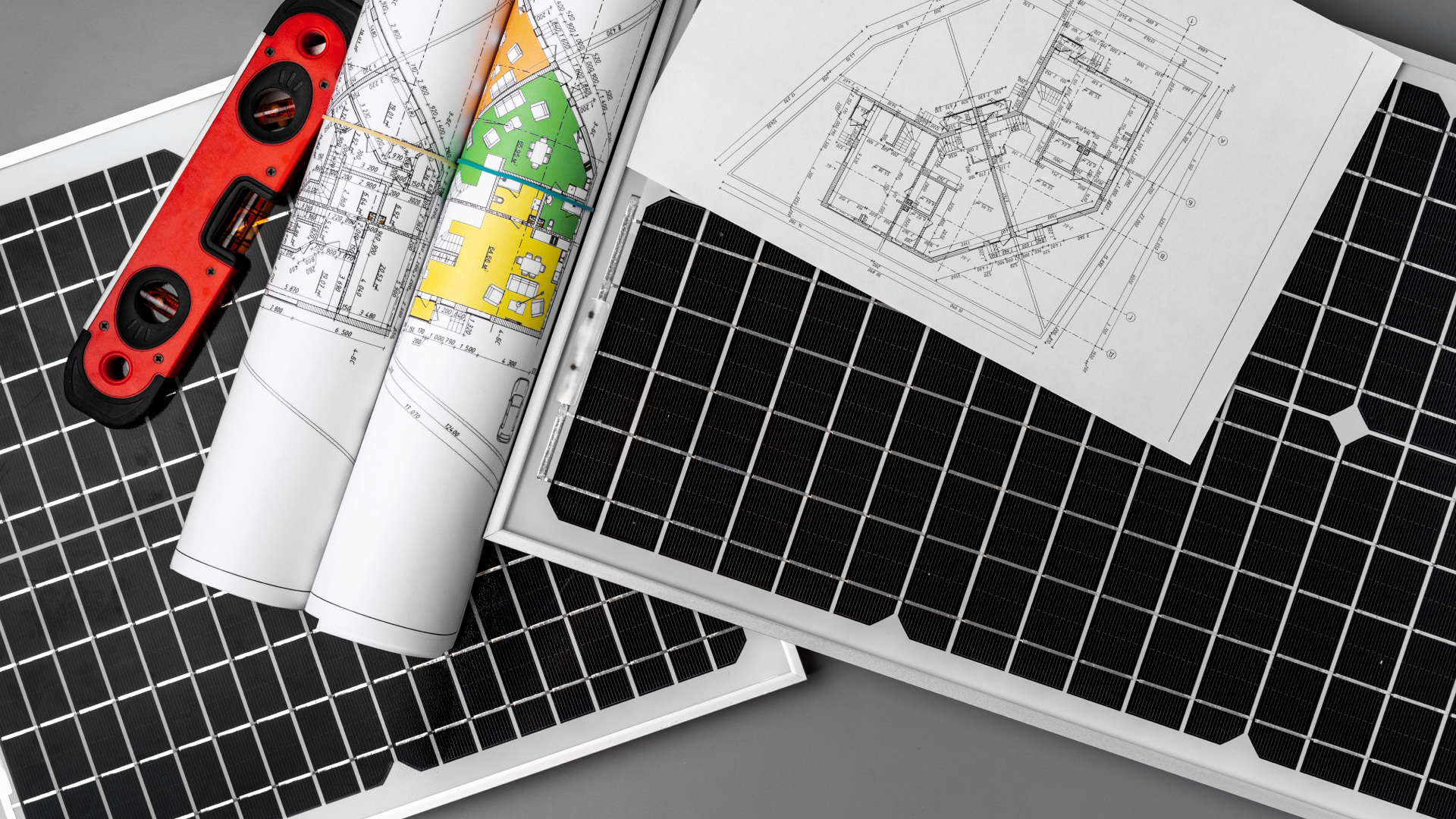
- Gradual standardization: While the ecosystem is still fragmented, there is a slow move towards better standardization in installation and system quality.
Advantages of Rooftop Solar
The reasons behind the growth of solar and roof installations are fairly straightforward.
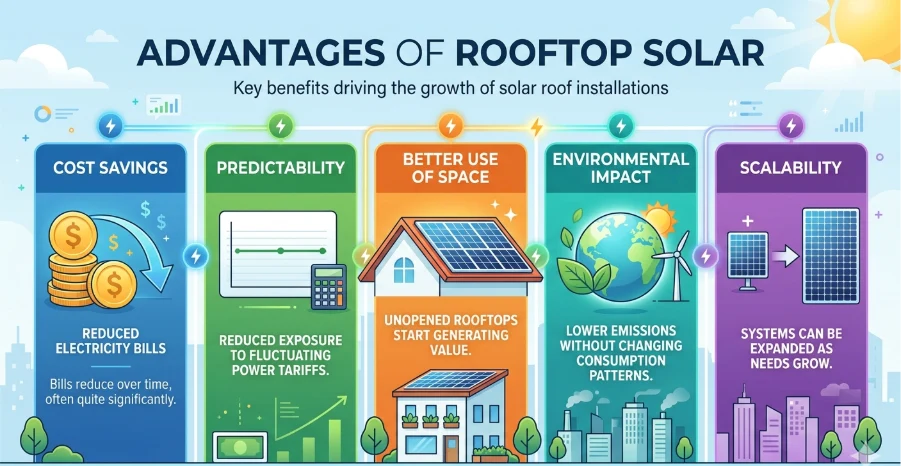
- Cost savings: Electricity bills reduce over time, often quite significantly.
- Predictability: Solar helps reduce exposure to fluctuating power tariffs.
- Better use of space: Rooftops that were otherwise unused start generating value.
- Environmental impact: Lower emissions without changing consumption patterns.
- Scalability: Systems can be expanded as needs grow.
Financing and Adoption: What’s Changing
Even with all these advantages, upfront cost continues to be a barrier.
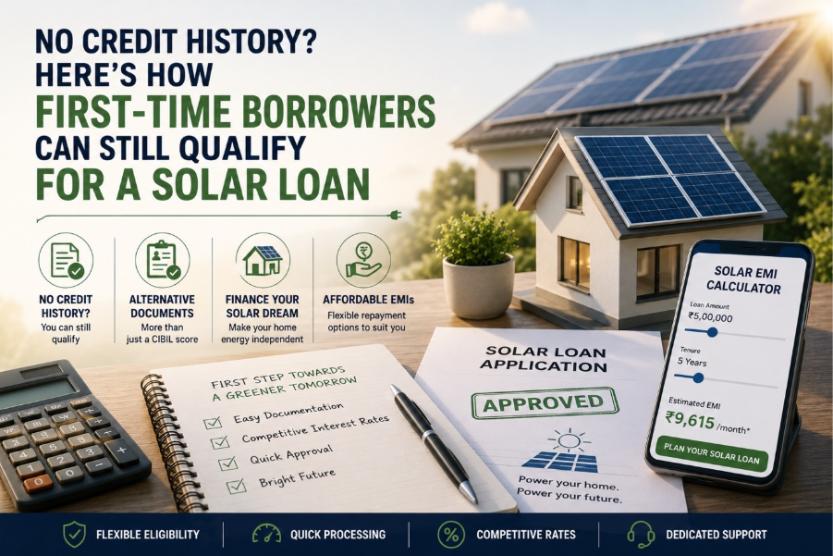
This is where options like a rooftop solar loan and broader solar power financing come in.
Instead of treating solar as a capital-heavy decision, users can now:
- Spread costs over time.
- Align repayments with savings.
- opt for better system quality without compromising on budget.
For businesses in particular, this changes the conversation from “Can we afford this?” to “How do we structure this well?”
Where AEREM Comes into the Picture
While adoption is growing, the process itself can still feel disjointed.
Financing, procurement, installation, and monitoring are often handled separately. This creates gaps, especially when something goes wrong or performance needs to be tracked.
This is where integrated approaches are beginning to matter more.
Aerem operates as a full-stack digital platform for solar adoption, bringing together solar power financing, procurement, and monitoring in one place. For users, this reduces the friction of dealing with multiple stakeholders and makes the entire journey, from decision to performance, more predictable.
Conclusion
The rise of solar panels in rooftop installations reflects a larger shift in how energy is being thought about in India.
It is becoming local, distributed, and more user-driven.
For homeowners, it’s about savings and reliability. For businesses, it’s about cost control and long-term planning. And for the market as a whole, it signals a move towards decentralized energy systems.
The opportunity is clear. What will define the next phase is not just adoption, but how well these systems are designed, financed, and sustained over time.



















.png)


.jpeg)
.jpeg)




.jpeg)










.jpeg)
.webp)
.png)
.png)
.png)
.png)
.png)

.png)
.jpg)
