
.webp)

.webp)
.webp)
.webp)


.svg)
.svg)

Introduction:
While India races toward its ambitious 500 GW renewable energy target, a less visible battle is unfolding on the ground. For EPCs, solar success is no longer just about installing panels in high-irradiation zones. In fact, solar grid constraints are emerging as the real problem, delaying commissioning, impacting plant performance, and inflating project costs.
States like Uttar Pradesh, Haryana, and Madhya Pradesh have strong solar potential, yet EPCs operating here regularly face solar infrastructure issues such as limited grid capacity, voltage instability, and prolonged approval timelines. Understanding these state grid challenges is critical for EPCs aiming to deliver projects on time while protecting long-term ROI.
Why Grid Constraints Matter More Than Geography?
Just like sunlight availability influences solar generation, grid readiness determines whether that power can actually be evacuated and monetized. In many parts of India, rapid solar adoption has outpaced grid upgrades, leading to grid congestion and capacity stress.
This mismatch causes EPC installation issues like:
- Delayed synchronization and commissioning
- Unexpected downtime post-installation
- Reduced CUF due to curtailment or voltage issues
In grid-constrained states, performance losses often stem not from faulty design, but from solar grid capacity and stability limitations. Therefore, grid constraints matter more than geography.
Key Grid Challenges Faced by EPCs: State-Wise Breakdown
Uttar Pradesh:
Primary constraint: Capacity limitations and approval delays
Uttar Pradesh has seen rising rooftop and C&I solar adoption, but grid limitations in UP remain a consistent concern. Many substations operate near maximum load capacity, which eventually restricts new solar connections.
Common EPC installation issues in Uttar Pradesh include:
- Limited evacuation capacity at local substations
- Frequent voltage fluctuations in semi-urban and rural feeders
- Delays in feasibility approvals and net metering clearances
These challenges push project deadlines and generate uncertainty about predicted generation, necessitating proactive monitoring.
Haryana
Primary constraint: Congestion and voltage instability voltage instability
Haryana’s proximity to high-demand industrial zones causes heavy stress on its grid infrastructure. EPCs often encounter grid congestion, especially during peak load hours.
Key grid limitations in Haryana includes:
- Slow down during peak demand periods
- Voltage instability affecting inverter performance
- Reactive power compliance challenges
Without sufficient visibility into grid behavior, EPCs suffer unexplained performance drops and client dissatisfaction.
Madhya Pradesh:
Primary Constraint: Evacuation and synchronization gaps
Madhya Pradesh has ample land and solar potential, but grid limitations in MP continue to affect project execution. In certain zones, the distance between substations and inconsistent grid availability pose major challenges.
EPCs in Madhya Pradesh frequently deal with:
- Delays in synchronization and DISCOM approvals
- Grid availability issues post-commissioning
- Performance variability caused by evacuation constraints
These solar infrastructure issues make long-term plant performance harder to predict without sufficient data access.
How Grid Constraints Impact EPC Projects?
In regions facing constant solar grid constraints, EPCs must go beyond installation and actively protect plant performance through data-backed monitoring and diagnostics. Solar grid capacity, congestion, and stability issues are now integral to project planning and execution.
Here’s a breakdown of why:
Grid Challenge
Impact on Projects
Effect on EPCs & Asset Owners
Delayed grid approvals & capacity limits
Commissioning and net metering are pushed back
Revenue realization is delayed, extending project timelines
Grid curtailment & congestion
Power export is restricted despite good generation
Lower annual output and reduced CUF
Voltage fluctuations & instability
Inverter trips and frequent system alerts
Higher O&M interventions and increased operating costs
Grid-linked underperformance
Generation losses not always visible to owners
Performance disputes, loss of trust, and reputational risk
The Role of Solar Monitoring in Grid-Challenged States:
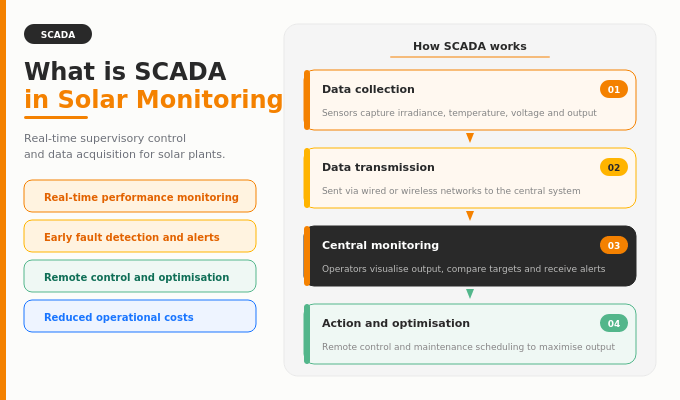
This is where EPC solar monitoring becomes crucial. Advanced monitoring helps EPCs distinguish between environmental losses, system faults, and grid-induced downtime.
With solar monitoring for EPCs in India, teams gain:
- Visibility into grid downtime versus plant downtime
- Early alerts for voltage anomalies and inverter trips
- Accurate generation benchmarking across locations
By combining solar maintenance monitoring with grid-level insights, EPCs can act before minor issues escalate into prolonged losses.
Managing O&M Across States with Limited Grid Stability
As EPC portfolios expand across multiple states, manual supervision becomes impractical. In regions with fluctuating grid stability, centralized monitoring enables EPCs to:
- Track multiple plants from a single dashboard
- Reduce dependency on site visits
- Prioritize maintenance based on real-time data
This approach not only lowers operational costs but also improves response time in grid-sensitive environments.
Choosing the Right Monitoring Approach for EPCs
Not all EPC solar monitoring systems are designed for India’s grid realities. EPCs should evaluate solutions based on their ability to track grid-related downtime and voltage trends, their scalability across states and DISCOM zones, ease of access, and data accuracy.
Many EPCs now prefer platforms that allow centralized visibility across all installations. Systems like Aerem’s monitoring tools enable installers to monitor multiple plants through a unified interface, making it easier to manage performance in grid-constrained states without operational complexity.
Conclusion
Solar success is majorly defined by how well EPCs navigate state grid challenges rather than how quickly and efficiently panels are installed - particularly in states like Uttar Pradesh, Haryana, and Madhya Pradesh. Therefore, EPCs must invest in reliable monitoring and data-driven operations to be ready to mitigate grid risks, maintain performance standards, and deliver estimated returns.
As India’s solar ecosystem matures, monitoring-led project management supported by platforms like Aerem will play an important role in transforming grid related challenges into manageable variables rather than deal-breaking obstacles.




















.png)



.png)



.jpg)
.jpg)





.jpg)





.jpg)


.png)
.png)
.png)
.png)
.png)
.png)


.png)

.jpg)
