
.webp)

.webp)
.webp)
.webp)


.svg)
.svg)

Introduction
Buying solar panels isn't like buying a phone, where you compare two or three brands and make a decision.
Homeowners often find themselves looking at unfamiliar names, different price points and technical specifications that don't always make much sense. Somewhere along the way, someone mentions "Tier 1 panels", and suddenly the decision feels even more complicated.
Does Tier 1 automatically mean better? Are Tier 2 panels unreliable? And most importantly, which solar panel brand is best for your home?
The answer isn't as straightforward as many people think.
This guide explains the difference between Tier 1 and Tier 2 manufacturers, what those labels actually mean and how to choose a solar panel brand based on your needs rather than marketing claims.
What Does "Tier 1" Actually Mean?
One of the biggest misconceptions in the solar industry is that Tier 1 is a government certification or a quality rating.
It isn't.
The term Tier 1 comes from industry research used by financial institutions to identify manufacturers with strong manufacturing capabilities, consistent production history and large-scale projects. In simple terms, it indicates that a manufacturer has demonstrated reliability and bankability over time.
That doesn't automatically mean every Tier 1 panel is the best choice for every homeowner.
Similarly, it doesn't mean every Tier 2 manufacturer produces poor-quality panels.
Understanding this distinction is the first step towards making a more informed decision.
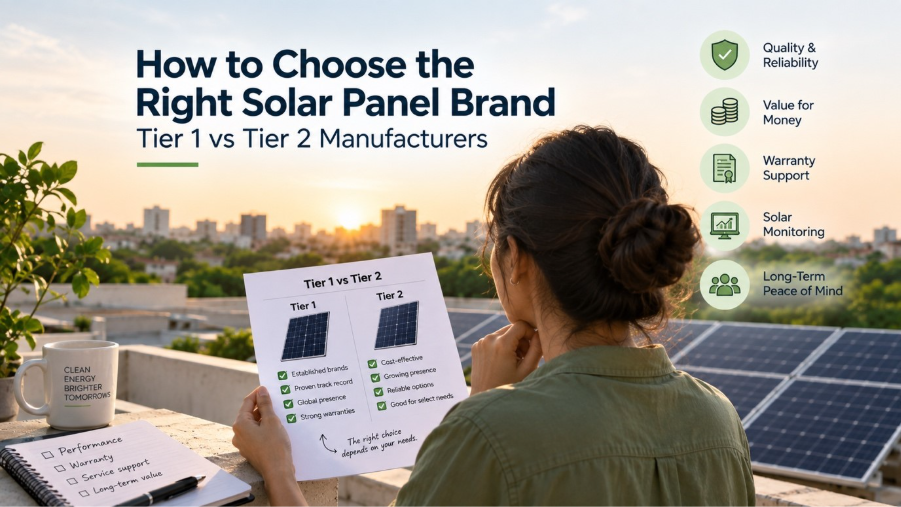
Tier 1 vs Tier 2 Solar Panels
So what does the difference look like in practice?
Here's a simple way to think about it.
A Tier 1 manufacturer is typically:
- A large, established company.
- Known for consistent manufacturing standards.
- Widely used in residential, commercial and utility-scale projects.
- Backed by strong financial stability.
A Tier 2 manufacturer may be:
- A smaller or newer company.
- More regionally focused.
- Producing quality products but at a smaller scale.
- Less widely recognised by international financial institutions.
When comparing Tier 1 vs Tier 2 solar panels, remember that the "tier" reflects the manufacturer's position in the industry, not a direct score for panel efficiency or durability.
For homeowners, the quality of the installation, warranty support and after-sales service are often just as important as the brand printed on the panel.
Which Brands Should You Consider?
India has a growing solar manufacturing ecosystem alongside several well-known international manufacturers.
Some of the top solar panel manufacturers India homeowners commonly come across include companies that have built a strong reputation for quality, manufacturing scale and long-term warranty support.
Rather than choosing a panel simply because it's popular, consider asking:
- Does the manufacturer have a proven track record?
- Is warranty support easily available in India?
- Are replacement panels likely to be available in the future?
- Does the installer regularly work with this brand?
The answers often tell you more than a long specification sheet.
Should You Always Choose a Tier 1 Brand?
Not necessarily.
Imagine two homeowners.
The first wants a long-term investment for a house they plan to live in for the next 25 years.
The second is working within a tighter budget and is looking for the best balance between cost and performance.
Both are making reasonable decisions, but they may not end up choosing the same panel brand.
A well-supported Tier 2 product from a reputable installer can sometimes be a better fit than choosing a Tier 1 panel simply because of the label.
The best decision is one that balances:
- Budget.
- Warranty.
- Performance.
- Availability.
- Installer confidence.
- Long-term support.
Look Beyond Efficiency Numbers
Panel efficiency often gets the most attention during sales conversations.
While efficiency certainly matters, it's only one part of the bigger picture.
When comparing brands, also consider:
- Product warranty.
- Performance warranty.
- Manufacturing reputation.
- Availability of local support.
- Compatibility with the rest of your solar system.
Two panels with very similar efficiency ratings can offer very different ownership experiences over the next two decades.
That's why experienced installers rarely recommend a panel based on one specification alone.
Questions to Ask Before Choosing a Solar Panel Brand
It's easy to compare brochures and technical specifications online, but a conversation with your installer often reveals much more.
Before making a decision, ask a few practical questions:
- Why have you recommended this particular brand?
- How long has your company been installing these panels?
- What warranties are included?
- If a panel needs replacement in the future, how easy will it be to source one?
- Does this brand have service support in my city?
- How does this brand compare with the alternatives you've quoted?
These questions shift the conversation away from marketing claims and towards long-term ownership.
Understanding Warranty Differences
A strong warranty is often a sign that a manufacturer has confidence in its product.
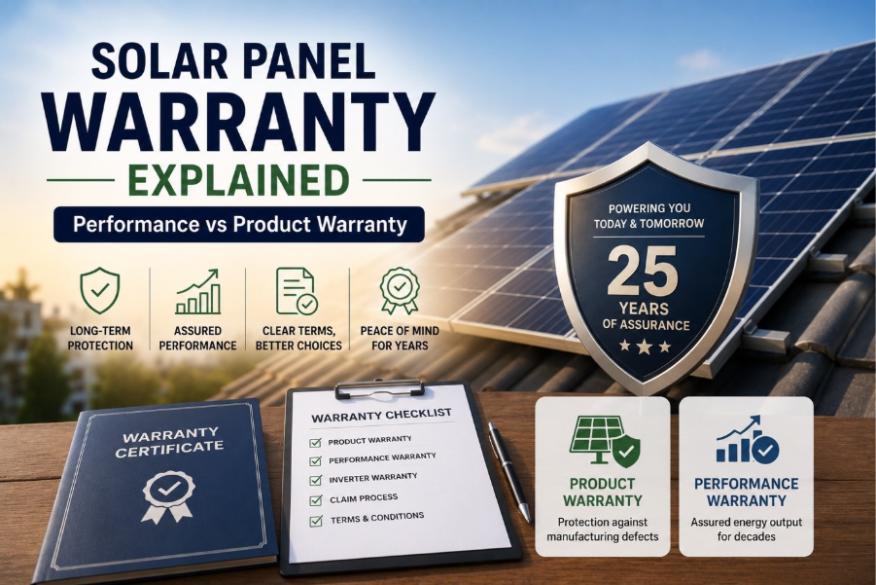
Most solar panel brands provide two types of warranties:
Product Warranty
This covers manufacturing defects and workmanship issues for a specified period.
Performance Warranty
This guarantees that the panels will continue producing electricity above a certain performance level over their expected lifespan.
When making a solar panel brand comparison, don't just compare the number of years. Also ask how warranty claims are handled and who will support you if an issue arises.
A well-defined warranty backed by a responsive service network is often more valuable than a longer warranty that's difficult to claim.
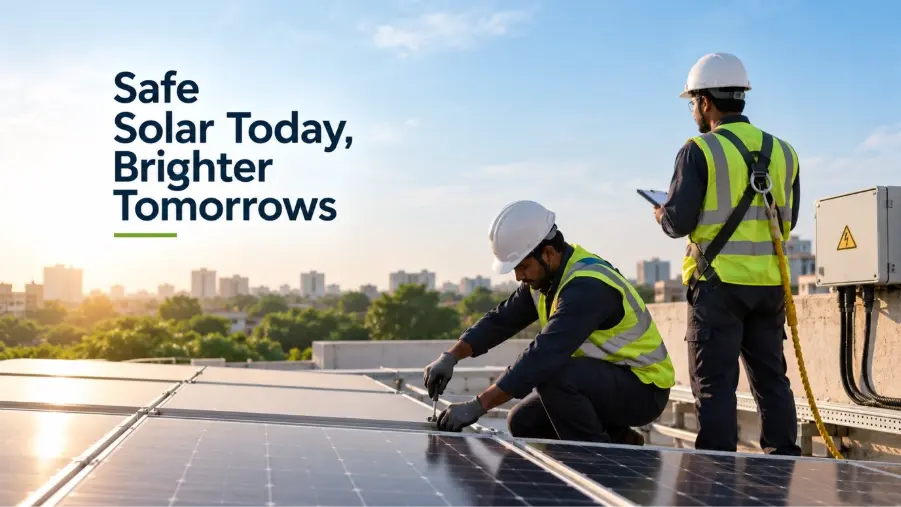
Why the Installer Matters as Much as the Panel
Imagine buying the highest-rated kitchen appliances and then having them installed incorrectly.
The equipment may be excellent, but poor installation can still affect how well everything works.
The same principle applies to rooftop solar.
Even the best solar panel brands India 2026 has to offer won't perform as expected if the system is poorly designed or installed.
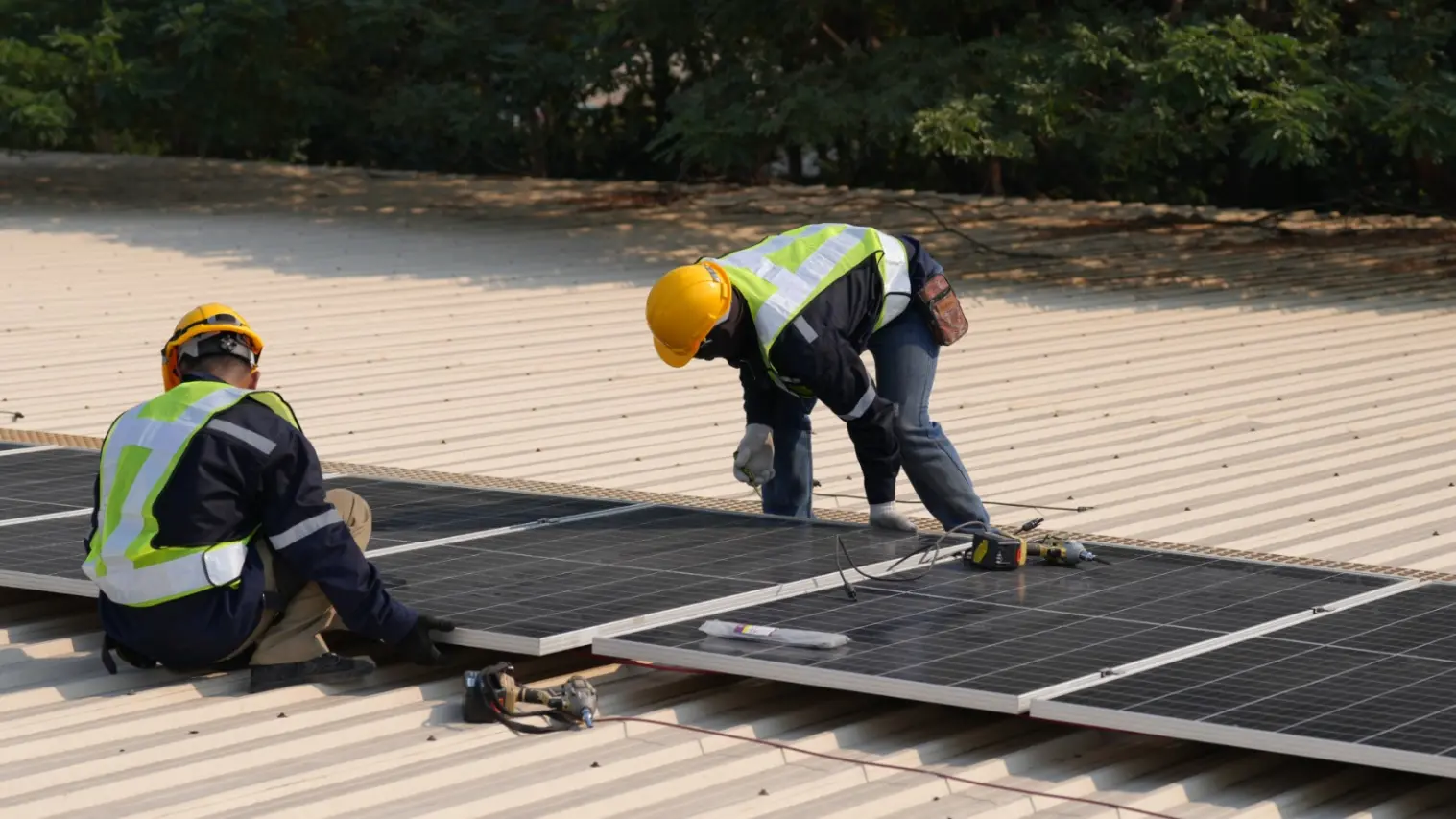
An experienced EPC partner helps ensure that:
- The right panel is selected for your roof.
- Mounting structures are appropriate.
- Electrical connections are completed safely.
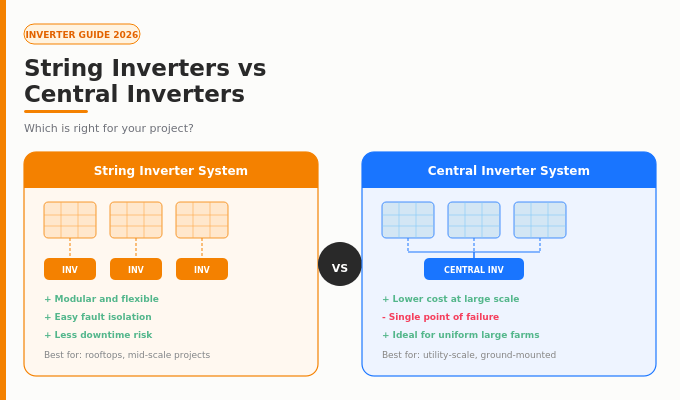
- The inverter is correctly matched to the system.
- Monitoring tools are configured properly.
In many cases, the installer has a greater influence on your day-to-day experience than the panel brand itself.
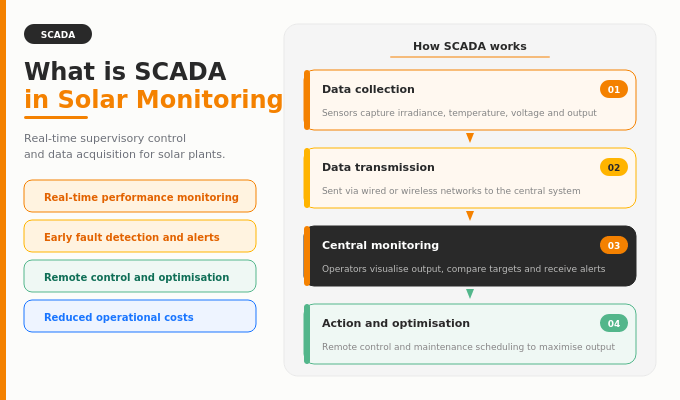
Don't Forget About Solar Monitoring
Choosing a good panel is only part of owning a successful rooftop solar system.
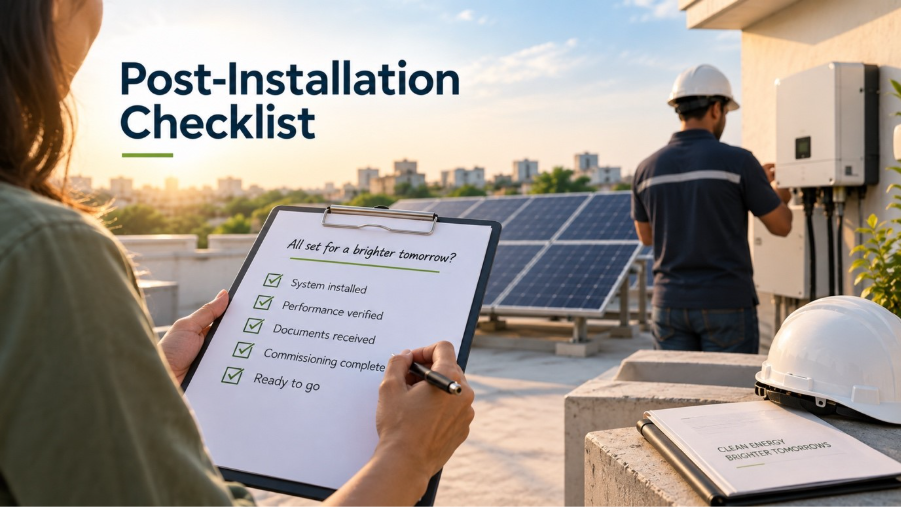
Once the installation is complete, you'll want to know how it's performing.
Many modern systems include solar monitoring, allowing homeowners to track:
- Daily electricity generation.
- Monthly energy production.
- System status.
- Performance trends.
- Alerts if something needs attention.
Monitoring doesn't make the panels generate more electricity, but it helps you understand whether the system is performing as expected and makes it easier to identify any unusual changes.
When comparing quotations, it's worth asking whether monitoring is included and how you'll access it.
How Aerem Helps You Choose with Confidence
There isn't a single solar panel brand that's perfect for every homeowner.
The right choice depends on your budget, roof, electricity usage and long-term goals.
Instead of recommending the same brand for every project, Aerem works with experienced EPC partners who evaluate your requirements first. They help homeowners compare options based on performance, warranty, service support and overall value rather than relying solely on marketing labels.
Combined with financing options, trusted installation partners and support for solar home installation, this approach makes choosing rooftop solar far simpler and more transparent.
Conclusion
Choosing a solar panel brand isn't about finding the most expensive option or simply selecting a Tier 1 manufacturer. It's about understanding what different brands offer and deciding which one best fits your home's requirements.
A reliable panel, backed by a strong warranty and installed by an experienced EPC partner, will usually deliver far more value than choosing a brand based on marketing alone. Looking at the complete picture, from product quality and service support to installation standards and monitoring, helps you make a decision you'll be comfortable with for years to come.
When you invest a little more time in comparing the right factors today, you're far more likely to enjoy dependable solar performance tomorrow.
Frequently Asked Questions











.png)


.png)



.jpg)
.jpg)





.jpg)




.jpg)


.png)
.png)
.png)
.png)
.png)
.png)


.png)
.jpg)
