
.webp)

.webp)
.webp)
.webp)


.svg)
.svg)

Introduction
If solar panels are the face of a solar power system, the inverter is its engine.
While the panels capture sunlight and generate electricity, the inverter is responsible for converting that energy into a form that homes and businesses can actually use. It also helps monitor system performance, manage safety functions, and, in many cases, communicate with mobile apps that let owners track electricity generation in real time.
Choosing the right inverter isn't simply about selecting a well-known brand. The type of inverter should match the size of the project, the roof layout, future expansion plans, and the way electricity is consumed.
With several types of solar inverters available today, it's worth understanding how each one works before making a decision.
What Does a Solar Inverter Do?
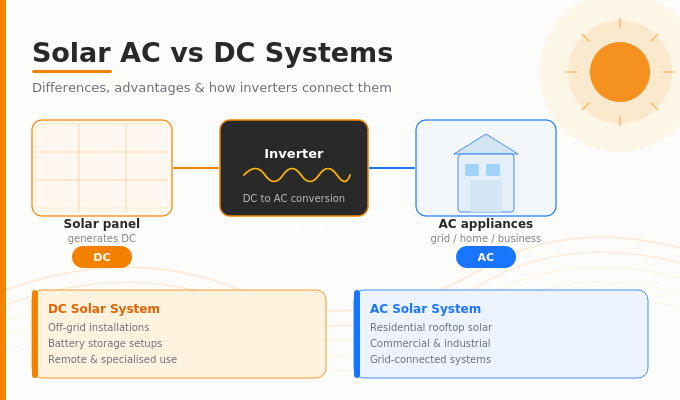
Solar panels produce direct current (DC) electricity. Homes, offices, and factories, however, use alternating current (AC).
The inverter performs this conversion, allowing the electricity generated by the panels to power appliances, machinery, and lighting.
Modern inverters also perform several other important functions, including:
- Monitoring electricity generation.
- Detecting faults in the system.
- Supporting grid synchronization for on-grid installations.
- Managing battery charging in hybrid systems.
- Improving overall system safety.
In short, even the highest-quality solar panels cannot function effectively without the right inverter.
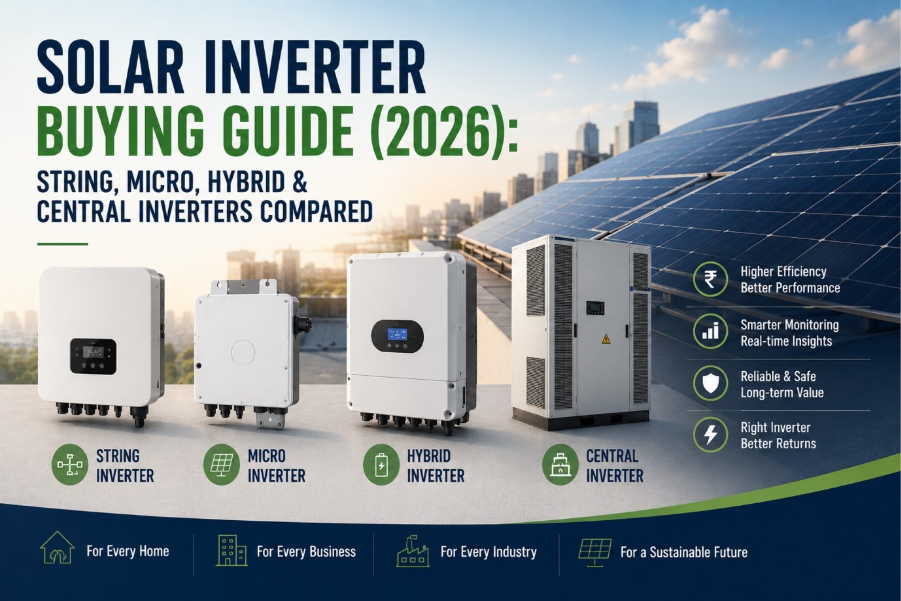
String Inverters Explained
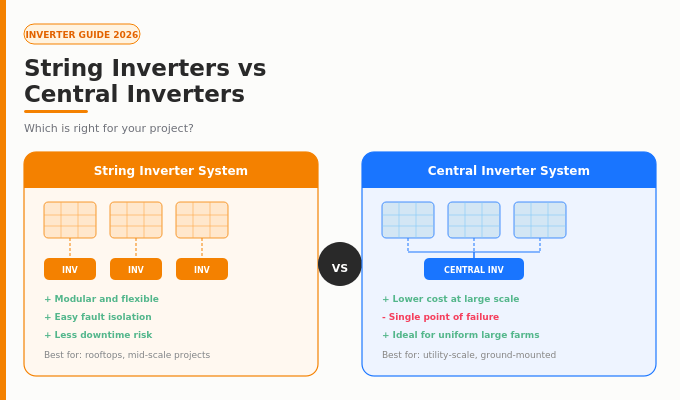
String inverters are the most commonly used inverter type for residential rooftops and many commercial installations.
In this setup, multiple solar panels are connected together in a "string," and the electricity generated by that group of panels is sent to a single inverter.
Because one inverter manages several panels, installation is relatively straightforward and costs are generally lower than some other technologies.
String inverters work particularly well when:
- The roof receives consistent sunlight.
- Most panels face the same direction.
- There is little or no shading during the day.
- The system layout is simple.
For many homeowners, they continue to offer an excellent balance between performance and affordability.
Central Inverters Explained
At first glance, central inverters look similar to large string inverters, but they're designed for a very different scale.
Instead of managing a few panel strings, a central inverter can handle electricity generated by hundreds or even thousands of solar panels.
That's why they're commonly used in:
- Utility-scale solar parks.
- Large industrial facilities.
- Ground-mounted commercial projects.
These systems benefit from simplified maintenance because fewer inverters are installed across the project. At the same time, central inverters require careful system design since any interruption can affect a larger portion of the plant.
For smaller rooftops, they're generally far more powerful than required.
Microinverters Explained
Instead of using one inverter for multiple panels, microinverters are installed behind each individual solar panel.
This means every panel operates independently.
Imagine two neighboring panels. If one is partially shaded by a chimney or tree, the other continues operating normally because it has its own inverter.
That's one reason the discussion around microinverters vs. string inverters in India has become more common in recent years, especially for homes with complex rooftops.
Microinverters are often suitable where
- Roofs have multiple directions or slopes.
- Partial shading occurs during different times of the day.
- Future panel expansion is expected.
- Panel-level monitoring is preferred.
Their higher initial cost is often balanced by greater design flexibility and improved performance under challenging roof conditions.
Hybrid Inverters Explained
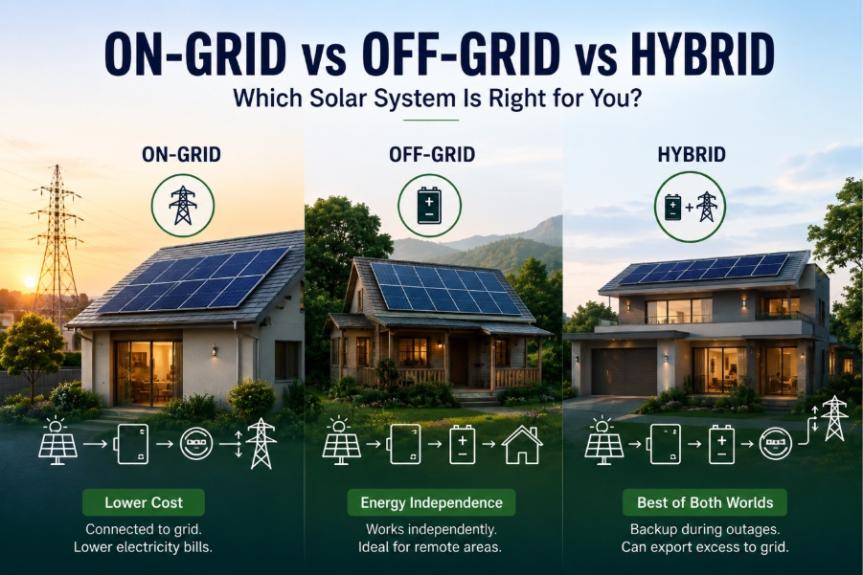
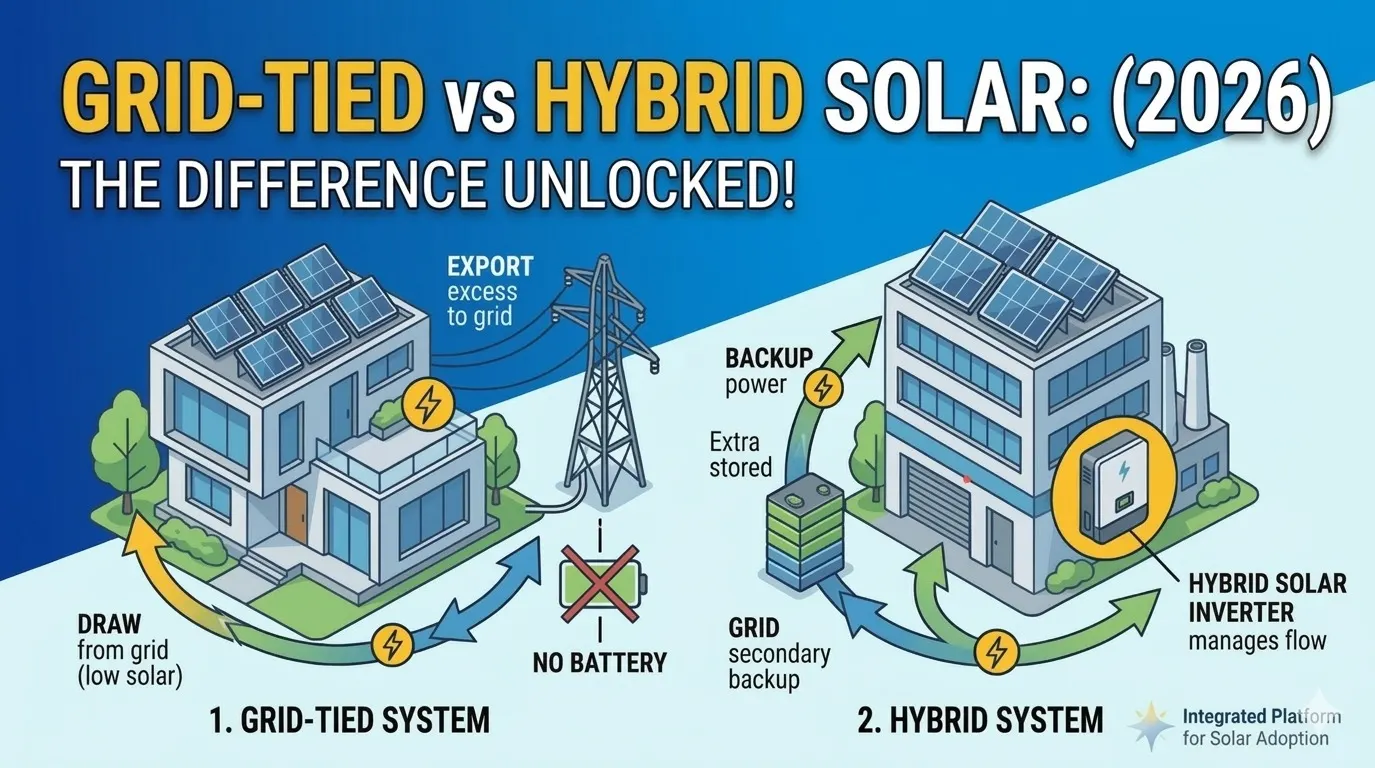
A hybrid inverter combines the functions of a standard solar inverter with battery management capabilities.
In simple terms, it allows the system to work with both rooftop solar panels and battery storage.
If you've ever wondered about a hybrid inverter explained in plain language, think of it as an inverter that's prepared for both today's electricity needs and tomorrow's energy storage requirements.
Hybrid systems are becoming increasingly popular among homeowners and businesses that:
- Experience frequent power cuts.
- Plan to install batteries immediately.
- Want the flexibility to add batteries later.
- Prefer greater energy independence.
Although hybrid systems usually involve a higher upfront investment, they provide additional flexibility as battery technology continues to evolve.
Comparison Table: Cost, Efficiency & Use Case
Each inverter type is designed for a different purpose. The right choice depends less on which technology is "better" and more on what your project needs.
While comparing string vs. central vs. microinverter technologies, it's helpful to focus on your roof layout, energy requirements and future expansion plans rather than price alone.
Which Inverter Type Suits Residential vs Commercial vs Industrial Projects?
Different projects have different priorities. A family installing rooftop solar has very different requirements from a manufacturing unit or a solar park.
Residential Homes
Most homes work well with either string inverters or microinverters.
A string inverter is usually suitable if the roof is open, receives consistent sunlight and all the panels face a similar direction.
Microinverters become more attractive when the roof has multiple sections, partial shading or future expansion plans.
If battery backup is part of the long-term plan, a hybrid inverter is worth considering from the outset.
Commercial Buildings
Commercial projects often have larger rooftops and higher daytime electricity consumption.
String inverters remain popular because they offer a good balance between performance and project cost. Hybrid systems may also be considered where backup power is important or energy storage forms part of the business strategy.
For many businesses, system monitoring and long-term service support are equally important when selecting an inverter.
Industrial and Utility-Scale Projects
Factories, warehouses, and utility-scale solar plants typically require equipment capable of handling much larger capacities.
That's where central inverters often become the preferred choice.
These systems are designed for large installations where centralized operation and maintenance provide operational advantages.
How to Choose the Right Inverter Type for Your Project
Instead of beginning with product brochures, start by understanding your own project.
A few practical questions can help narrow the options.
Ask yourself:
- How much electricity does the property consume?
- Does the roof experience shading during the day?
- Will additional panels be installed in the future?
- Is battery backup required now or later?
- How important is panel-level performance monitoring?
- What is the available project budget?
For many homeowners searching for the best inverter type for home solar, there isn't a universal answer.
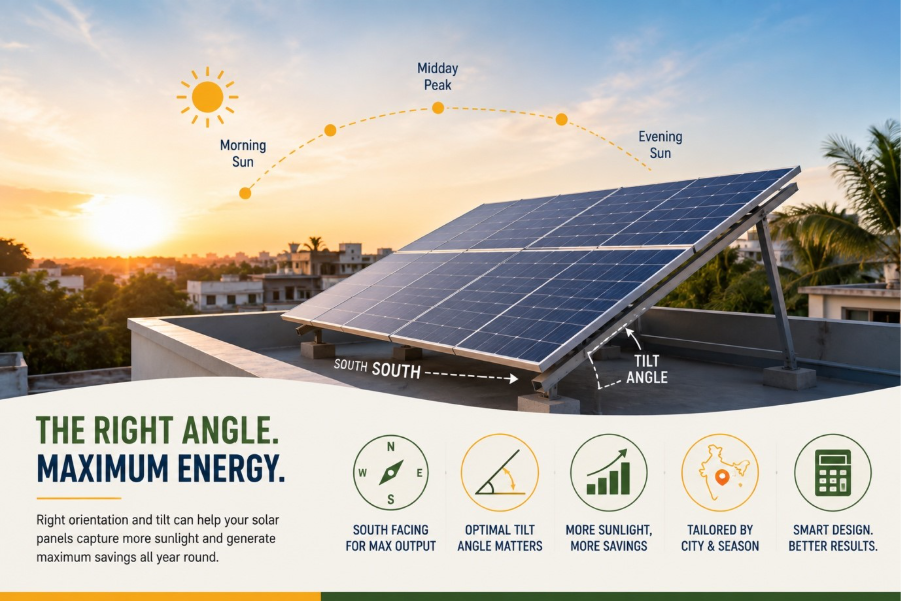
A simple south-facing roof with no shading may perform exceptionally well with a string inverter. A more complex roof with multiple orientations may benefit from microinverters, while households planning battery storage often find hybrid systems more suitable.
The right inverter is the one that fits the project, not necessarily the one with the longest feature list.
Smarter Monitoring Starts with the Right Inverter
Modern solar systems do far more than generate electricity.
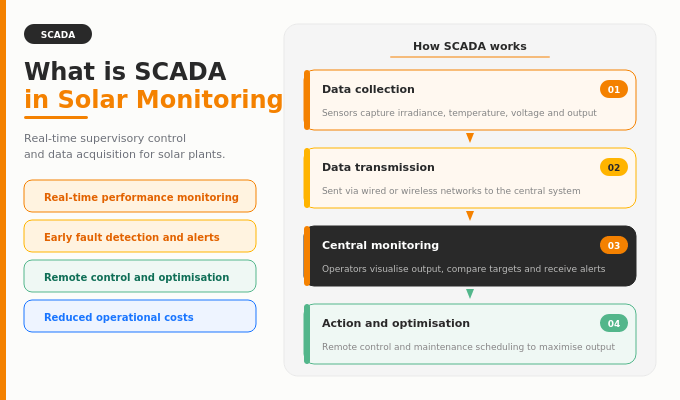
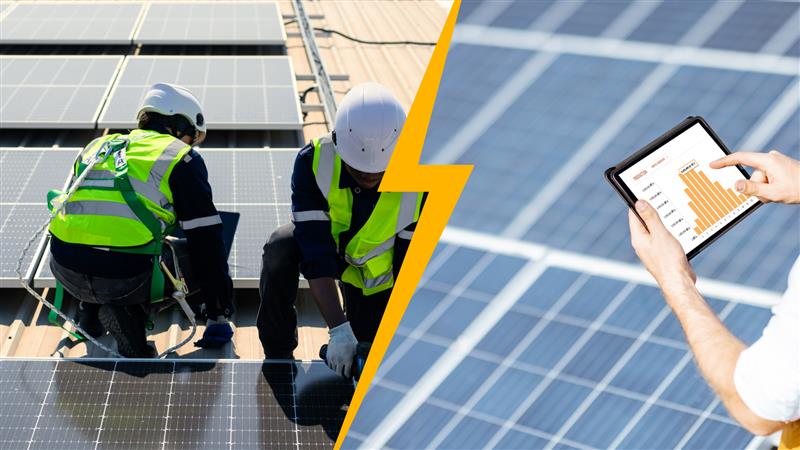
Many inverters connect to mobile apps or cloud-based platforms that allow users to monitor generation, identify unexpected drops in performance, and review historical energy data.
Effective solar monitoring helps homeowners and businesses understand whether the system is performing as expected without waiting for the monthly electricity bill.
For larger commercial projects, this visibility becomes even more valuable because maintenance teams can identify issues early and reduce unnecessary downtime.
How Aerem Helps You Choose the Right Solar System
Choosing an inverter is only one part of designing an efficient solar project.
Aerem helps homeowners and businesses evaluate the complete system, including panel selection, inverter technology, financing options and long-term performance. Rather than recommending a single solution for every customer, the focus is on matching the technology to the project's actual energy needs.
For businesses planning larger rooftop systems, Aerem also supports commercial solar financing, making it easier to invest in high-quality equipment while managing cash flow effectively.
Conclusion
The inverter plays a central role in how efficiently a solar system performs over its lifetime. While solar panels often receive most of the attention, choosing the right inverter can influence energy generation, system flexibility, and future maintenance.
There isn't a single inverter that's ideal for every project. A residential rooftop, a commercial building, and a utility-scale solar plant each have different requirements, which is why understanding the strengths of each technology is so valuable.
Taking the time to evaluate your roof, electricity consumption, future expansion plans, and monitoring needs will help you select an inverter that continues delivering reliable performance for many years. If you're planning your investment through residential solar finance, selecting the right inverter from the beginning can also help maximize long-term value and system performance.











.png)


.png)



.jpeg)
.jpeg)




.jpeg)










.jpeg)
.webp)
.png)
.png)
.png)
.png)
.png)

.png)
.jpg)
